Creative Medical Humanities Network Japan

Who we are
Creative Medical Humanities Network Japan, or the [cmh] network, is a group of researchers and advocates committed to working with people with health conditions in imaginative, caring ways that go beyond traditional research and actions.
Inspired by the feminist visions of environmental humanities, we focus on health conditions shaped by complex interactions among human and non-human actors and driven by political, economic, and environmental injustices. The network draws inspiration from Michiko Ishimure, whose writing and advocacy gave voice to people affected by methylmercury pollution in Minamata.
We aim to address conditions including, but not limited to, Covid-19-induced conditions (such as Long Covid), poison-induced conditions (such as Minamata disease), radiation-induced conditions (such as microcephaly), mosquito-borne infectious diseases, and livestock and wild animal diseases.
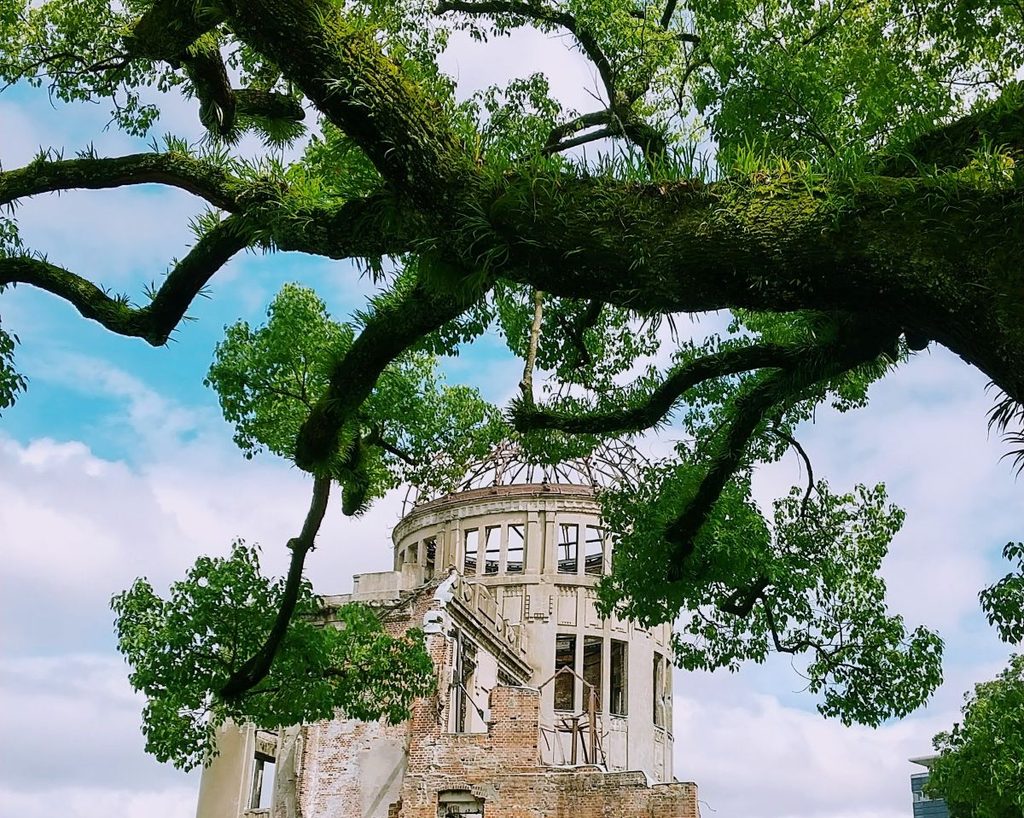
Creative Medical Humanities Network Japan は、さまざまな健康問題を抱えた人たちに寄りそい、想像力を働かせながら、従来の研究や支援の枠組みにをこえてゆく研究や実践をおこなう人たちのネットワークです。(”Creative Medical Humanities” を日本語でいうと「創造的な医療人文学」です。人文学的な知を大切にしながら、今までとは違うやり方で健康問題について考えるという意味です。)
健康問題の中には、人間や人間以外のさまざまな要因で引き起こされると同時に、政治、経済、環境の不正義によって加速されるものがあります。私たちは、フェミニストの環境人文学に導かれつつ、このことについて考えます。(環境人文学とは聞き慣れない言葉かもしれませんが、たとえば石牟礼道子は、代表的な環境人文学の書き手だと言えるでしょう。)
私たちは、たとえば、コロナ後遺症のような新型コロナウイルス感染症の長期的影響のほか、水俣病のような環境汚染の影響、原爆小頭症のような放射線の影響、そして八重山の戦争マラリアの歴史について考え続けます。またウイルス性の動物感染症のように、ヒト以外の生物の健康問題にも取り組みます。
People
Mika Saito (Ph.D. DVM, MA)
is a veterinarian and virologist at the University of the Ryukyus. Her work explores mosquito-borne infectious disease through epidemiology, tropical medicine and citizen science. She also investigates the history of malaria in the Yaeyama Islands, exploring relationships among infectious disease, local communities, environment, and social change.
Akiko Ishihara (MA, MPH, Ph.D.)
is an associate professor at Kumamoto University and a scholar and practitioner of restorative justice and strategic conflict transformation based in Minamata City. She has been working on the revitalization and reconciliation of divided communities by environmental and earthquake disasters in Japan – Minamata, Fukushima, Okawa, etc., combining trauma healing, restorative justice, and nonviolent social movement approaches. Currently, she is also working on end-of-life reconciliation and reconciliation of conflicts surrounding dementia.
Naomasa Hirao
is Secretary General of Kinokokai, the association of atomic bomb survivors with microcephaly and their families. His relationship with the association began in the 1990s, when he worked as a documentary producer at RCC, a broadcasting station in Hiroshima, and reported extensively on the survivors’ experiences. He is currently conducting Ph.D. research on the same issue at Hiroshima University.
Rie Harada
is a Senior Researcher in the Regional Policy Section of the Department of International Affairs and Research at the National Institute for Minamata Disease. She is an environmental sociologist whose research topics include the social harm suffered by the generation affected by fetal Minamata disease; the organization and use of materials related to Minamata disease; and regional revitalization in areas affected by Minamata disease.
Akinori Hamada
is a social and medical anthropologist at the University of Tokyo. He has explored how human beings, infectious diseases and medical technologies are collaboratively making contemporary worlds. His research topics include the introduction of national health insurance in Southern Ghana and the experience of and response to COVID-19 in Japan.
Sae Nakamura
is an Associate Professor of Cultural Anthropology at the University of Tokyo. Her research explores chronic illness, environmental change, and histories of development in Sri Lanka, while extending her ethnographic work to Minamata in Japan. She is currently working on chronic kidney disease of uncertain etiology (CKDu) in collaboration with Sri Lankan researchers, healthcare professionals, and local filmmakers.
Yoko Taguchi
is a cultural anthropologist at Hiroshima University. Her research interests include citizen movements, domestic work, and care, focusing on urban India, exploring the dynamics of family, kinship, social, and environmental relations. She is also engaged with collaborative and feminist ethnography and translation.
Wakana Okuda
is a cultural anthropologist at Kanda University of International Studies. Her research in Brazil focuses on social inequality. Her past and current research topics include folk beliefs (the evil eye), mutual aid among street vendors, infectious diseases (Zika, COVID-19, and Hansen’s disease), and abortion.
Maki Kitagawa
is a cultural anthropologist at the National Museum of Ethnology. Her research, situated at the intersection of medical and multispecies anthropology, focuses on wildlife management and animal infectious disease control in Japan, with particular attention to the negotiations between these management practices and hunting.
Makoto Nishi (Network Coordinator)
is a cultural and medical anthropologist at Hiroshima University. He has explored how illness experiences are shaped by human and non-human relationships, power, and institutions. His past and present research topics include the HIV epidemic in Ethiopia, epilepsy in postwar Northern Uganda, and families with autistic children during the Covid-19 pandemic in Japan.